


Andaman Discoveries Blog
Tuesday, May 8, 2012
Life with the Moken in Tung Dap
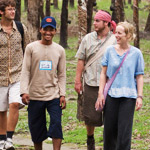
This month I had the chance toexperience one of the village tours in the remote village of Tung Dap, locatedon the Island of Koh Prathong, with one of our guests Mandy and our translatorand guide Pi-Tui.

We left Kuraburi and made our wayto the pier and took the long-tail boat out to the Island. The boat ride outthe Island was amazing, the color of the leaves from the mangrove trees wasbright green, glistening and shining in the early morning sun and the oceanturns from green to blue as the boat navigates through the shallow and deepwaters.

Before reaching the island, wewent to explore the mangrove forest and learnt about the way the local peoplemanage the environmental conservation of this mangrove area. We also learnt about the medicinal use of themangroves, and learnt about many animals and crustations which live within themangroves. This is a natural habitat forthese animals which has to be preserved to protect all the remarkable speciesliving there. The amazing mangroveeco-system acts as a nursery for crabs, fish and shrimp, and is well managed bythe villagers, who try to minimize environmental impacts for our futuregenerations.
After that, we met Pi-Noi and herhusband Da Nong and had a delicious lunch together,freshly caught sea food……….. aroy J After lunchwe observed the traditional method to take tin out of the sand, this is a longprocess and very hard work.

We also had the chance to learn how to make squidtraps; it’s not as easy as it looks and it’s amazing how fast the locals weavethe net.

The atmosphere of the village wasvery relaxing and everyone was very friendly. We were able to ask a lot ofinteresting questions about their culture and way of life on the island andwere able to share stories and experiences between our hosts and Mandy thanks to our great translator and guide Pi-Tui.
The cultural exchange was intenseas Mandy was able to tell about her life back in Australia and what herimpressions were of seeing this new culture and Pi-Noi seemed amazed to hearabout Mandy’s life back in her home town and compare the way they live.
At one point, the exchange was quietfascinating, because Pi-Noi was talking about her experience during the 2004tsunami and how challenging it is to be Moken in a rapidly changing world. Moken are very proud of their life style andtreasure keeping the close and important connection with the nature, I was solucky to be part of this exchange.
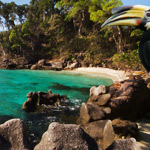
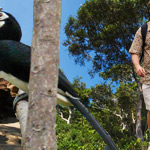
Later in the day we had a uniqueride through the savannah on a customized tractor a one off ingenuousinvention and had some coconuts caught by Da Nong as he climbed thecoconut tree right in front of the beautiful pristine beach.


After that we came back to thevillage and learnt how to make Thai desert with Pi-Noi. We cooked sticky ricein freshly grated coconut milk and wrapped in a banana leaf, the Thai way.

We’ve been amazed all day by theway villagers welcomed us to their village and with this beautiful landscapesurrounding us.


If you like the sound of thistrip, or if you would like to find out more about this program, don’t hesitateto contact us, it’s a great and unique cultural experience.
Labels: activities, biodiversity, community tourism, community-based tourism, conservation, cultural tours, ecotourism, Moken

Thursday, July 16, 2009
Freshman Year
Villagers Experience First-Hand Training
 The village of Ban Lion on Koh Phratong became a real-life classroom for two days in June. Built after the tsunami, Ban Lion is a collective of people from many different villages and cultures, yet they live together harmoniously.
We held a training and pilot tour on how to manage and develop activities for tourists, with help from the Mangrove Action Project. The villagers’ enthusiasm was encouraging...
“A place is about the people. The people of the Ban Lion Village made the experience. The guides and homestay hosts exuded an enthusiasm that cannot be imitated. Their pride and willingness to share their way of life was remarkable,” said Program Development Manager Mimi Cheung.
Ban Lion is surrounded by a fertile mangrove forest and swamp forest, and the villagers take pride in the biodiversity in and around their village. There are marine animals such as sea turtles, dugong, and dolphins. Bird watchers rejoice at the abundant avian offerings, including the rare lessor adjutant stork.
Ban Lion Village was built with the support of Lions Club International for tsunami-affected people from several villages on Koh Prathong, including Pak Jok Village, which was totally destroyed. The ultimate goal of the training is to promote development of community-based tourism. “By sharing their lifestyle and the jewel of Koh Phratong, the villagers pride increases as well as their motivation to preserve the place they call home,” said team member Leslie Welshimer.
Koh Phratong’s stunning environment has made it a focus of conservation groups like Naucrates and Mangrove Action Project (MAP). Andaman Discoveries, North Andaman Community Tourism Network (N-ACT) and MAP (Mangrove Action Project) collaborated to offer the training for Ban Lion village in June (with funding support provided by the Ecumenical Coalition on Tourism).
Jeannine Curd, volunteer English teacher and pilot tour participant, said, “I feel honored to have been a part of the first group to come to this village on a CBT program. The people were all very helpful.”
Jaruwan Kaewmahanin (Ning), Thailand Field Project Manager for MAP, said, “Ban Lion is unique because it is a collective of people from many different villages and cultures, yet they can live in a harmonious way.”
Read Leslie Welshimer’s pilot-tour participant story.
Labels: Ban Lion, biodiversity, community tourism, Koh Phratong, Mangrove Action Project, Pak Jok Village
Subscribe to Posts [Atom]