


Andaman Discoveries Blog
Tuesday, May 8, 2012
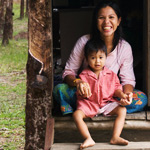
Life with the Moken in Tung Dap


Labels: activities, biodiversity, community tourism, community-based tourism, conservation, cultural tours, ecotourism, Moken

Wednesday, August 25, 2010
Critical Acclaim
Ban Talae Nok on TripAdvisor
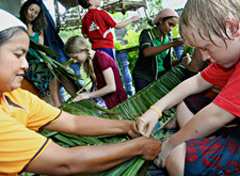 Have you visited Ban Talae Nok village as part of an Andaman Discoveries tour? Andaman Discoveries and the villagers alike proudly announce that Ban Talae Nok is now on TripAdvisor, where three people have already given the picturesque village top ! We encourage you to visit the TripAdvisor site, read the reviews, and provide your own feedback.
TripAdvisor.com is a free travelguide and research website that assists customers in gathering travel information, posting opinions of travel related issues and engaging in interactive travel forums. TripAdvisor is an example of consumer generated media. The website services are free to users, who provide most of the content, and the website is supported by an advertising business model.
Labels: Ban Talae Nok, community development, community tourism, TripAdvisor
Wednesday, April 7, 2010
Tourism and Poverty Reduction
By Claudine Nagiah
Tourism is one of the world's largest and fastest growing industries. Tourist spending in developing countries is almost three times greater than the amount of international development assistance. The potential of tourism industry to contribute towards poverty reduction is enormous.
Andaman Discoveries recently attended the launch of a new book on tourism and poverty reduction, written by Jonathon Mitchell and Caroline Ashley from the Overseas Development Institute in London. The book looks at the different ways that money from tourism impacts the local economy and local people in developing countries, and identifies three main pathways that tourism spending flows to poor people:
1. Direct effects, such as employment;
2. Indirect effects, such as the growth of construction and retail sectors, and increased demand for agricultural products;
3. Dynamic effects, such as improved infrastructure in the country, and a greater tax base to fund social welfare and education.
The authors found that between 5–25% of tourist spending makes its way to poor people, so the potential for tourism to make a positive impact on the lives of poor people is huge.
Unfortunately, where tourism it is poorly regulated, the results can be disastrous. Insensitive tourism development can have negative impacts on local environment and wildlife. It can contribute to the loss of cultural heritage and traditional livelihoods, and result in the displacement and exploitation of local people. More needs to be done, particularly in the mainstream tourism sector, to reduce these negative impacts and ensure that tourism really does bring positive benefits for poor people.
Here at Andaman Discoveries, we have done our own analysis of how tourism funds are spent. In 2009, 17% of the income from tourism went directly to communities and local partners for the provision of tourism services
 volunteer placements. An additional 16% went to locally owned businesses for provision of services such as transportation and accommodation. That’s a total of 33% of tourism spending, going directly to local people in the region. In addition, a further 44% went towards community projects that provide benefit to local communities, such as scholarships, conservation, tree planting, and vocational training.
Community based tourism (CBT) in the North Andaman region has been particularly successful as a socio-economic strategy to help communities recover from the impact of the Asian tsunami in 2004. It provides people with a sustainable form of income within their own village, after their homes, fishing boats and farms were destroyed. The emphasis on homestays and handicraft projects is particularly helpful for women, as it gives them a viable way to support their family and increases their standing within the community. People have less need to relocate to major cities and tourist destinations to make a living, which helps to keep the village and its cultural traditions alive.
The positive benefits of CBT can reach far beyond financial impacts. When managed effectively, CBT puts the villagers in control of their own destination; the villagers make the decisions about how tourism in their village will be managed and so can work together to ensure their lands, their cultural heritage and natural environment are protected. The very fact that tourists come to visit their village instills them with a deep sense of pride and a determination to preserve their culture and environment for future generations.
Income generated by Andaman Discoveries’ tours support a number of conservation projects in the area. Funds from tourism help to finance environmental projects such as recycling and solid waste management, whilst the tourists and volunteers are able to directly support projects such as mangrove rehabilitation and conservation of rare species of water lilies and orchids. The children in the villages, schools and orphanages we work with benefit enormously from the time and attention which our guests and volunteers so generously give; it helps to improve their English skills, gives them exposure to different nationalities, cultures and values, and above all brings them lots of fun and laughter.
So, from us all here at Andaman Discoveries, we would like to say a big “thank you” to all of our guests, volunteers and supporters. It is because of your support and kindness that we are able to continue making a positive impact in the lives of the communities we work with.
Labels: Andaman Discoveries, community tourism, community-based tourism
Monday, January 18, 2010
Community Network - Profiles from the Field
Alee Salee, Niyom Prai Group, Ton Kloy Village
 Born in a nearby village, Alee moved to Ton Kloy as a young man, and, for many years, supported his family by hunting wild animals. The forests surrounding Ton Kloy are renowned for rare plants, a great diversity of butterflies, and abundant wildlife. Over time, Alee began to understand that it was important “to protect the forest and keep wildlife in this area for people to see in the future.”
While keeping a clear eye on the future, Alee is also addressing the pressing conservation problems of today. Along with other former hunters from Ton Kloy, Alee visits surrounding villages, and asks hunters to refrain from shooting the deer, gaur, serow, and other wildlife that come to Ton Kloy’s fruit orchards for food and water. Alee reports that his efforts have been successful in reducing illegal wildlife hunting; there are no longer any hunters in his village and five hunters from nearby villages have stopped poaching.
When his village formed the “Niyom Prai” conservation group in 2007, Alee was among the first to join. From the onset, the group has worked to develop the area’s ecotourism potential with a focus on jungle hikes, including a spectacular waterfall and an historical tin mine. The Tourism Club also engages in community service activities including trail maintenance, road side clearance, and rubbish removal.
“By successfully preventing hunting and forest encroachment in our village, we can then expand to other villages when they have seen the result,” Alee concludes, “going to hunt a deer we can feed only five or six persons, but if we keep a deer everyone can come and see it for a long time.”
Labels: community tourism, conservation, ecotourism, Ton Kloy
Thursday, November 5, 2009
Setting the Standard
Establishing Sustainable Tourism Policies
 Representatives from Andaman Discoveries and North Andaman Community Tourism (N-ACT) met with the Tourism Authority of Thailand (TAT), village leaders, and responsible tour operators in Bangkok recently to design and implement a new sustainable-tourism standard for Thailand. The group established and ranked policies in such areas as service and safety, resource management, cultural heritage, and economics. ”The new standards include homestays, and are a good start towards establishing guidelines to help villagers interested in community tourism,” said Nattaya Sektheera of N-ACT.
The meeting was part of a project called the Corporate Social Responsibility and Market Access Partnerships (CSR-MAP) for Thailand Sustainable Tourism Supply Chains, and is funded by the European Union. The project targets suppliers in the Thailand tourism industry, which offer sustainable-tourism products, as well as local Thai communities, which have developed community-based tourism (CBT) programs, and European tour operators with a firm commitment to support of sustainable tourism.
Labels: community tourism, community-based tourism, responsible tourism, sustainable tourism
Friday, October 30, 2009
Life’s a Clean Beach
UK Family Supports Environmental Effort
 Andaman Discoveries and the village of Ban Talae Nok are extremely grateful to the Hannah Family (UK). Shortly after their recent village homestay, this benevolent family of four donated 10,000 Thai Baht (about $290) to the Ban Talae Nok Youth Group to support a regular beach clean-up effort. “We had such a fab stay at the village and thoroughly enjoyed the relatively unspoilt beauty of the coast there. We believe it would be a good thing, for everybody, if the beach was kept free of rubbish,” said Susan Hannah.
Every two months the youth – armed with gloves and trash bags – will work their way down the beach picking up shoes, bottles, and plastic. The funding will also supply them with drinks and snacks. “Through just a little effort a few times a year, Ban Talae Nok will keep its stunning beach,” added Susan Hannah. “The Hannah family’s generosity reinforces the importance of keeping our beach clean and litter free,” noted an appreciative Ladda “Pink” Aharn, community coordinator in Ban Talae Nok.
Labels: Beach, charity, community tourism, conservation, Thailand tours
Conservation and Culture
Holiday Specials Showcase Region's Diversity
Planning to travel in Thailand this holiday season? Check out the expanded range of activities and villages available in this year’s special holiday tours. We’ve covered everything from reefs to rainforest and hikes to handicrafts! We invite you to explore the traditional culture and natural environment of the North Andaman region of Thailand--whether you’re traveling with family or exploring on your own, these special itineraries showcase the best of everything this unique region has to offer. Best of all, you will be helping local communities preserve their traditional culture and environment.
 |  |  |
The spectacular natural beauty and cultural diversity of the North Andaman region make it a fascinating place to explore--the area boasts the largest concentration of mangrove forest in Thailand, as well as tropical jungles, beautiful beaches, coral reefs, and sea grass beds. It is also home to the rare dugong and the green turtle. No less diverse are the region's people: Muslims, Buddhists, and Moken Sea Gypsies all co-exist with their own unique cultures.
While many fishermen and farmers still make their living by traditional methods, much of the area's fauna and flora is under threat from habitat loss. In recent years local communities have realized the potential of sustainable tourism to negate these threats and conserve the ecological and cultural beauty of the region.
Contact us for more information about this special two-day adventure, or any of our Cultural, Family, or Hands-On itineraries today!
Can’t travel to Thailand but still want to support community conservation? Please consider purchasing a holiday gift from the Andaman Discoveries handicrafts store. We offer hand-made cards, Ban Talae Nok herbal soap, and hand-carved Moken boats. Proceeds help provide local people with a complimentary source of income while still continuing their traditional way of life.
Labels: community tourism, community-based tourism, conservation, Thailand tours
Monday, August 31, 2009
BBC Filmmaker’s Unique Experience
World Challenge 2009 - Voting Opens September 28
 |
| The BBC film crew captures moments of the UCLA study tour in Ban Talae Nok. |
The film crew visited several AD projects, including Tung Dap, the Burmese Learning Center, and Ban Talae Nok. “The visit to meet the Moken villagers on Tung Dap was truly a unique experience. I have traveled far and wide to over 80 countries in the course of my work and leisure, but rarely have I experienced what I did that day. I was let into and warmly received (with no strings attached) to a private and special community. The sensitive manner in which Andaman Discoveries and the communities it works with approaches these visits, is in my opinion the only sustainable path in order to retain a true taste of adventure without trampling all over and quickly losing what was special and attracted one there in the first place,” said the film crew director.
According to Kevin Hung, a UCLA student, “being part of the filming of this program as an active participant in ecotourism has given me hope for the people of Thailand and the world's environmental mindset as a whole. Thank you for the opportunity to be part of something so big and I wish you the best of luck in years to come.”
While the filming was timely to be during the study tour, it wasn’t timely for weather! During the three-day visit, Phang Nga province had record rains that caused severe flooding, closing roads and requiring evacuations. The students, guests, film crew, and all of us have a newfound appreciation for the term “monsoon”!
Andaman Discoveries will be in the spotlight on BBC World News on Oct. 17 at 2:30 p.m. (GMT) and Oct. 18 at 2:30 a.m., 9:30 a.m. and 5:30 p.m. (GMT). Also, Newsweek will have a feature article coinciding with the BBC World News broadcasts. We’ll announce when the Newsweek article has gone live.
You can vote for Andaman Discoveries from Sept. 28 through Nov. 13. Voting will be available at the World Challenge Web site.
Special thanks again to Stanislava Cholakova, on behalf of the SEED Initiative, for the nomination.
Labels: BBC, community development, community tourism, World Challenge 2009
Thursday, July 16, 2009
Freshman Year
Villagers Experience First-Hand Training
 The village of Ban Lion on Koh Phratong became a real-life classroom for two days in June. Built after the tsunami, Ban Lion is a collective of people from many different villages and cultures, yet they live together harmoniously.
We held a training and pilot tour on how to manage and develop activities for tourists, with help from the Mangrove Action Project. The villagers’ enthusiasm was encouraging...
“A place is about the people. The people of the Ban Lion Village made the experience. The guides and homestay hosts exuded an enthusiasm that cannot be imitated. Their pride and willingness to share their way of life was remarkable,” said Program Development Manager Mimi Cheung.
Ban Lion is surrounded by a fertile mangrove forest and swamp forest, and the villagers take pride in the biodiversity in and around their village. There are marine animals such as sea turtles, dugong, and dolphins. Bird watchers rejoice at the abundant avian offerings, including the rare lessor adjutant stork.
Ban Lion Village was built with the support of Lions Club International for tsunami-affected people from several villages on Koh Prathong, including Pak Jok Village, which was totally destroyed. The ultimate goal of the training is to promote development of community-based tourism. “By sharing their lifestyle and the jewel of Koh Phratong, the villagers pride increases as well as their motivation to preserve the place they call home,” said team member Leslie Welshimer.
Koh Phratong’s stunning environment has made it a focus of conservation groups like Naucrates and Mangrove Action Project (MAP). Andaman Discoveries, North Andaman Community Tourism Network (N-ACT) and MAP (Mangrove Action Project) collaborated to offer the training for Ban Lion village in June (with funding support provided by the Ecumenical Coalition on Tourism).
Jeannine Curd, volunteer English teacher and pilot tour participant, said, “I feel honored to have been a part of the first group to come to this village on a CBT program. The people were all very helpful.”
Jaruwan Kaewmahanin (Ning), Thailand Field Project Manager for MAP, said, “Ban Lion is unique because it is a collective of people from many different villages and cultures, yet they can live in a harmonious way.”
Read Leslie Welshimer’s pilot-tour participant story.
Labels: Ban Lion, biodiversity, community tourism, Koh Phratong, Mangrove Action Project, Pak Jok Village
Take a Hike ... Up Mae Nang Khaow Mountain!
N-ACT Organizes Pilot Trip
 The North Andaman Community Tourism (N-ACT) Network arranged a light trek up Mae Nang Khaow Mountain with ecotourism specialist Bill Tuffin. The purpose was to determine the viability of the hike as an ecotourism activity for Mae Nang Khaow village. “The route was of high interest, with fascinating things like a large banyan tree. The hike has potential for a tourist activity once the route is improved,” concluded Bill.
The hikers were treated to a peaceful waterfall during the three-hour activity, which bypassed the summit in favor including a local temple. (Venturing further up the mountain could reward more intrepid trekkers with additional waterfalls and a possible sighting of the famous raffleasia flower.)
N-ACT strives to support villagers in the region through activities like the Mae Nang Khaow hike. “The villagers are keen to welcome guests. Pilot tours help us determine areas for potential and for improvement, like points in the hike to explain interesting plants or history. One such point of interest is a big Sai and stone at the ground,” said program manager Nattaya “Nat” Sektheera.
Labels: community tourism, ecotourism, N-ACT, raffleasia flower, trekking
Wednesday, July 1, 2009
Community-Based Tourism Pilot Tour: The Real Value of a Home
It’s hard to explain what makes a home inviting and exude warmth. Is it the comfy sofa, the pictures on the wall, or a manicured lawn?
I believe that people create the feel of a place (okay, so architecture is a big player too, but if you fill the most beautiful building in the world with grumps, it’s not going to be a fun place).
Have you ever walked into a work place, and felt tension so thick, you could cut it with a knife? No one is talking, but yet you feel the emotion of the people.
 |
| Ban Lion Village |
Ban Lion showed me what makes a place. The people, with genuine warmth in their eyes, a smile and the kindness to share their lives made their residences inviting, not the homes lined up like an Excel spreadsheet.
Our destination for a two-day pilot tour in June was Ban Lion, a village located on the northwest side of Koh Prathong in Phang Nga Province. The residents are a collective of people from different villages who were affected by the tsunami in 2004. The homes in the village were built with the support of Lions Club International.
We were greeted while unloading from the boat. I was instantly impressed that the villagers came to us, versus waiting for us to come to them.
The home style in Ban Lion likely contrasts the image of Thai homes most foreigners have in their heads. My first thought upon arrival was, “Am I in an American suburb?” Completely identical homes are in clean, distinct lines.
Any confusion I had was replaced and trumped ten-fold by the people. They were so determined to make us feel at home. Our homestay hosts were two, 20-year-old girls, who work at the nearby Golden Buddha Beach Resort.
The first day we explored sea grass at low tide where pools were full of more star fish than I’d ever seen at once. We visited the old village, called Pak Jok. The tsunami devastated Pak Jok Village, leaving only small sections of concrete road and the bases of a few buildings. From there, we walked to the beach for sunset.
 |
| Sun Dew Plant |
On day two, we took a short tractor ride to the golden grass fields. Our energetic guides’ passion for the area was contagious. They took special care to point out each detail. My favorite plant was the sun dew, which has a trap for insects to fall into to provide the plant with nutrients.
There was a brief discussion at the end of the tour where we gave our feedback on everything from the food to activities. My overall feedback was that it’s the seemingly small stuff that makes a tour, a restaurant, a hotel or the world work. Life is all about the difference between someone pointing down the street, when you’re new in town and ask where post office is, versus someone walking you there and buying you a cup of coffee.
-Leslie Welshimer
Labels: community tourism, homestay, Thai culture, Thailand, Thailand homestay
Friday, March 27, 2009
First Person: Claudine's Reflections on Tung Dap
 | |
| Gill, P' Noi, and Claudine in front of P' Noi's house in Tung Dap |
P' Noi is a fantastic story-teller. After we had eaten an amazing dinner of fresh seafood we would sit on the floor in P' Noi’s beautiful wooden house listening to stories from her Moken childhood. Both P' Noi’s parents died when she was a young girl, but she was fortunate enough to have eight brothers and sisters, including a twin sister P' Ya. P' Noi spent the majority of her childhood aboard a Kabang -- a traditional wooden boat which the Moken use as a home, fishing boat, and for transportation. The Moken used to spend months at time on the ocean, travelling around the Andaman Sea in search of the fish which make up the majority of their diet. Moken fishing practices are low impact and sustainable -- only taking what they actually need to survive and putting back any fish which are too young.
 | |
| P' Noi and her family re-built their home with wood collected from the island’s mangrove forests |
Pee Noi has certainly experienced a great deal during her lifetime. After the tsunami wiped out most of the homes, farms and fishing boats in Tung Dap, P' Noi and her family re-built their home with wood collected from the island’s mangrove forests, with minimal assistance from the many aid organizations present in Thailand at that time. The family didn’t want to live in a house built by somebody else, because they wouldn’t feel they truly owned it or belonged there. P' Noi believes that the events of December 2004 helped her become a stronger person. Her resilience, self-reliance and positive attitude towards such a catastrophic event is a huge inspiration.
 P' Noi and the Moken community live in a way which some people might think of as basic or ‘backward’. They have no cars and there are no shops nearby. Yet the island’s rivers, forests and oceans provide almost everything they need to live a happy, healthy and comfortable life. Having money is not important to them. Offering homestays to responsible and respectful tourists offers P' Noi a way to try to protect and preserve her way of life and the Moken culture against the potential encroachment of commercial mass tourism.
A visit to Tung Dap offers a fascinating insight into a way of life which is slowly disappearing. It often touches visitors in ways they don’t expect and leaves them with incredible memories to take away with them.
We are grateful to P' Noi for inviting us into her home and sharing her stories and her lifestyle so openly with us. Thanks also to Tu for being such an excellent guide and translator.
Labels: Andaman, community tourism, homestay, Moken, Thailand, Tung Dap
Subscribe to Posts [Atom]